Latest Posts

“Colored-Pencil Table” Installation by Nendo

colored-pencil_tables02

At a quick glance, Nendo’s new installation for the upcoming Saint-Etienne International Design Biennial in France looks like a simple grouping of colorful plastic tables, but what’s going under the surface is more complex. To create the unusual pastel finish, Japanese design firm used a technique called udukuri to carve away the soft parts of cypress wood boards so that the harder curves and lines of the wood grain stand out.  Then, they covered the boards with paper and traced the relief in colored pencils to transfer the wood grain onto the paper. The strokes of the pencils and the wood grain pattern combine to create subtle shades and a unexpected sheen on the table surface. The installation will be on view at the biennial from March 14 through March 31st.

colored-pencil_tables05 colored-pencil_tables07 colored-pencil_tables08 colored-pencil_tables09 colored-pencil_tables10 colored-pencil_tables12 colored-pencil_tables15 colored-pencil_tables16 colored-pencil_tables17

All photos by Hiroshi Iwaski

KINTO Tableware

COULEUR_img

Couleur Tea Pot Set.

One of the best things about going to the New York International Gift Fair (NYIGF) each season is discovering manufacturers that I never heard of and becoming a fan before I’ve left the booth. At this winter’s show, that company was KINTO Co. Founded in 1972 as a wholesaler of porcelain and ceramic tableware in Japan’s Shiga prefecture, the company began to develop their own designs in glass, wood, ceramic, and other materials, for the Japanese lifestyle in the 1990s, and started a full-scale export business in 2009.

Based on the simple premise of creating products “to make our lives comfortable”, their line includes a range of coffee and tea related pieces as well as other designs. New this year is the Couleur teapot set, which combines a modern design form with the classic Japanese teapot. The microwave- and dishwasher-safe set includes a pot, cup, and saucer. Inside the pot, the spout is covered by a delicate porcelain strainer that is an example of the company’s craftsmanship. KINTO also launched an elegantly glazed new tableware brand called atelier tete that refers to the delicate, handmade quality of the clay pieces (te is hand in Japanese). I don’t know if it’s a scientific fact that tea tastes better in a handmade cup, but with these pieces, it certainly looks like it tastes better.

BRIM

Brim Teapot.

capsule_img

Capsule Water Carafe.

CARAT_img

Carat Coffee Dripper.

CARAT_tea_img

Carat Tea Pot.

COULEUR_img2

Couler Tea Pot Set.

loopteastrainer_i_002

Loop Tea Strainer.

27326_500

Loop Tea Strainer.

NEIGHBORS_img

Neighbors Stackable Saucer and Cup.

Dune_2

Dune Series from Atelier Tete.

Dune

Dune Series from Atelier Tete.

Grotto_2

Grotto Series from Atelier Tete.

strata_2

Strata Series from Atelier Tete.

Strata

Strata Series from Atelier Tete.

Yarok Hair Care Products

yarok_group photo_test

As soon as I check into a hotel room, one of the first things I do is check out what hair- and body-care products are stocked in the bathroom. The good stuff, like Aveda, Bath & Body Works, and (Malin+Goetz), gets tucked into my suitcase with the hope that more will appear the next day (it doesn’t always – which can be disappointing and a bit embarrassing). Visitors of The Thief Hotel, which opened earlier this month in Oslo, will most likely be stashing the Yarok organic hair care products that are exclusive to the hotel. Founded by Israeli hair stylist Mordechai Alvow, Yarok produces formulas that are a blend of organic and all-natural botanicals that are consciously sourced and sustainably harvested. I like the slightly medicinal look to the packaging that conveys idea that these shampoos, conditioners, and treatments are good for your hair, like vitamins. The company donates 3% of its annual profits to the Pachamama Alliance, a non-profit that protects over 10 million acres of rainforest in the Amazon. That might help convince you that ordering the pricey, full-size versions, is practically a charitable contribution.

Yarok TT

The Yarok amenities are exclusive to The Thief Hotel in Oslo.

hair whip 2 oz

006dsthethief_0

The Thief Hotel in Oslo, Norway.

BirdProject Soap

Birdies with boxedited

I love it when a quiet little object is able to convey an entire story— it’s like product poetry.

This is the tale of BirdProject Soap: One day, as it’s foraging for food, a seabird is caught up in a terrible man-made disaster. When it tries to fly out of the sea again, it is coated with oil and is clinging to life. The next day it is found by rescue workers, who gently wash off the black oil and release it back into the wild.

The concept for BirdProject began in 2010, when designer and entrepreneur Tippy Tippens moved from Brooklyn to New Orleans to help contribute to the relief efforts after the BP Oil Spill. Intended to be a powerful representation of all of the creatures affected by the disaster, BirdProject is a black, bird-shaped soap that contains a white ceramic bird keepsake—handmade from Louisiana Clay by New Orleans-based artist Brooke Cassady—that will slowly reveal itself over time as the soap washes away. The soaps are made by Emily Manger Davis of Sweet Olive Soaps—a third generation soapmaker from New Orleans—of natural, locally sourced ingredients including biodiesel glycerin, fair trade olive oil, aloe, activated black charcoal, and a light cypress scent intended to be reminiscent of Louisianan bayous.
Birdies
An outstanding 50% of the profits from the soaps will go to environmental cleanup and care for affected animals of the BP Deepwater Horizon Oil Spill Disaster ($18,000 has been raised to date). I think these make an incredibly thoughtful gift for bird lovers, environmentalists, or anyone who wants to make a purchase that gives a little more back than expected. The soaps are $24.00 at Matter Inc.

birdsoapcollage

Pluck Egg Separator

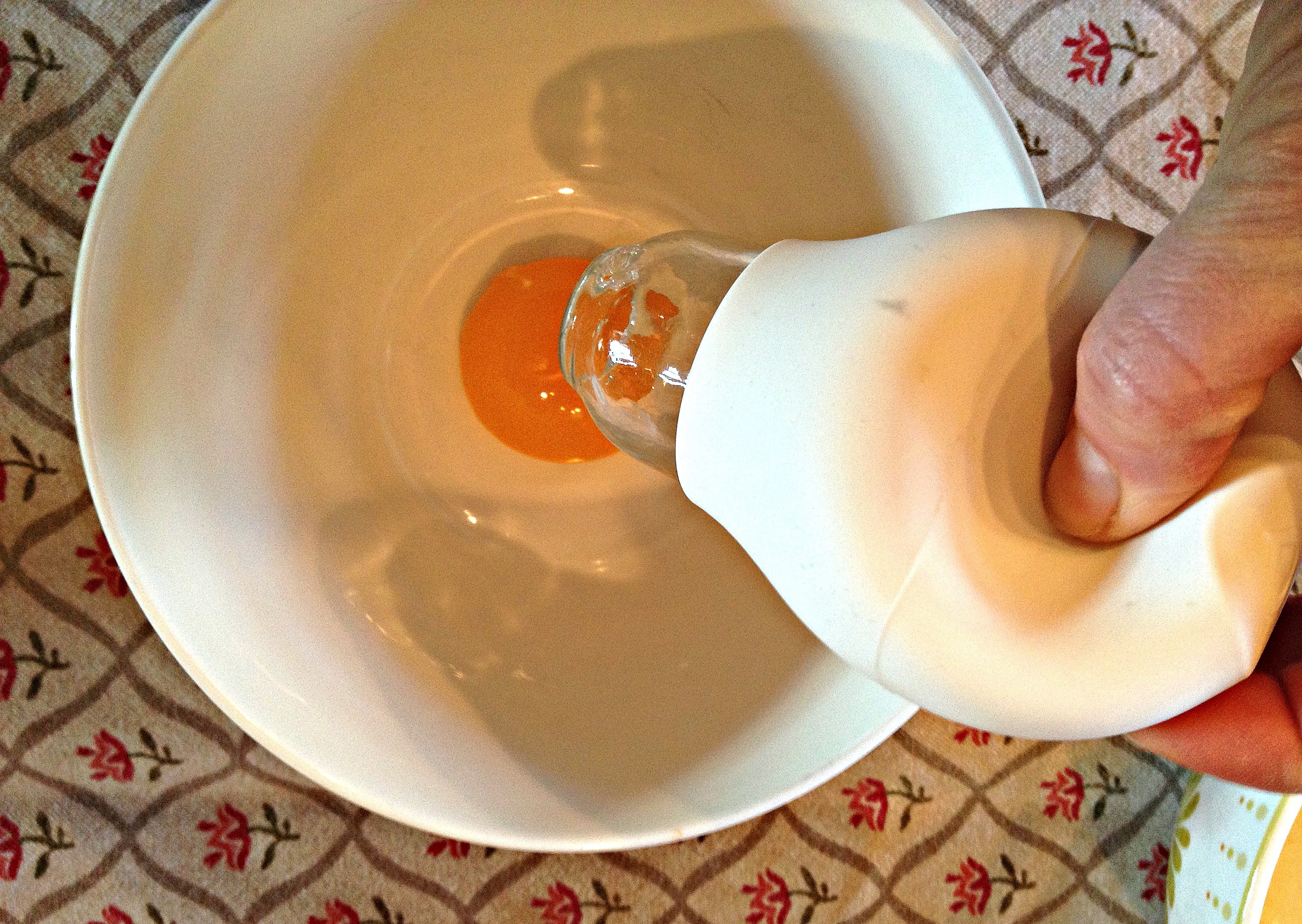
Testing to see if the Pluck egg separator sucks or not.

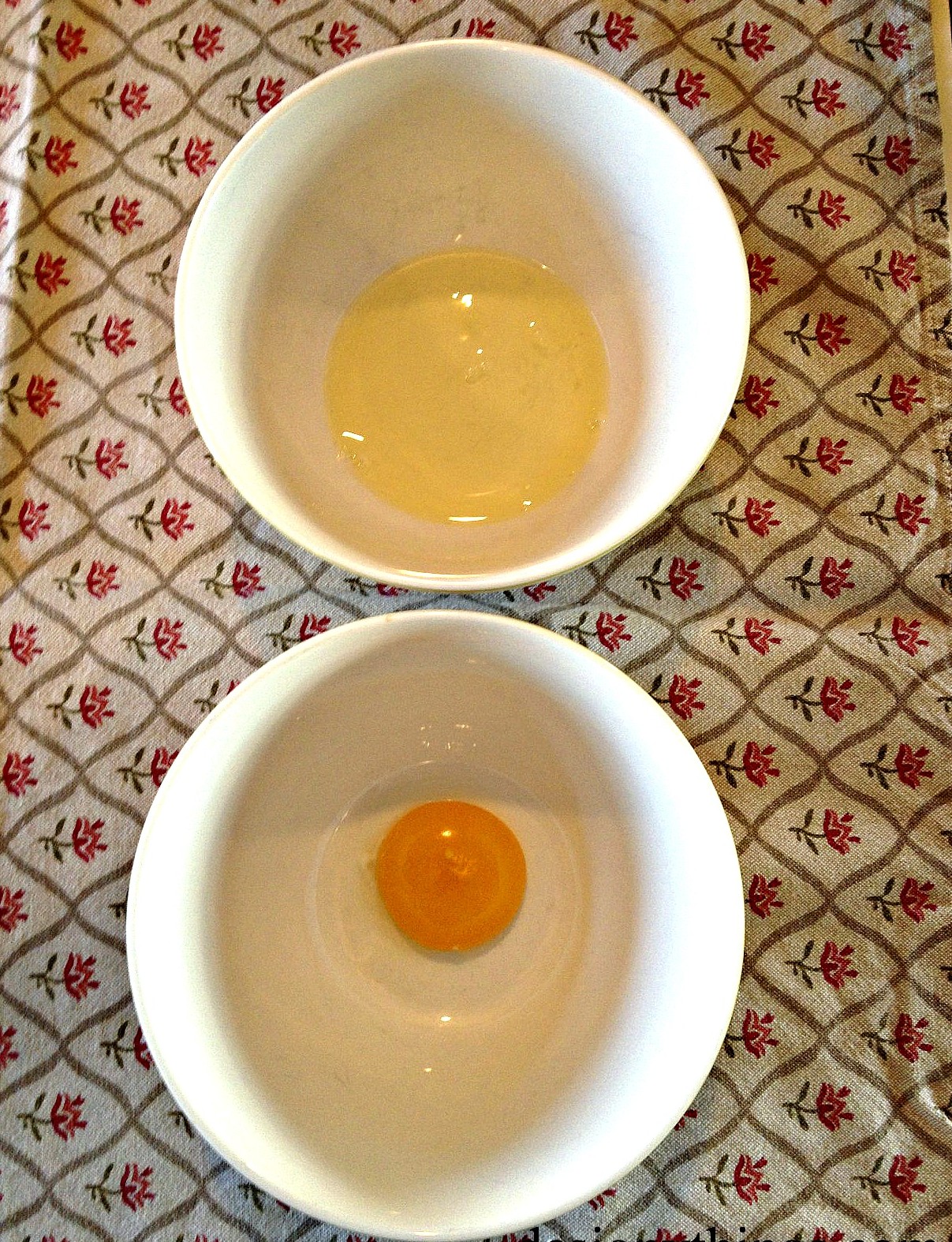
Testing out the Pluck egg separator.

Separating eggs takes a moderate amount of confidence, but once you have it mastered you don’t need any tools, just your hands and the eggshell. But for those who feel a bit less confident in that arena, a well-designed egg separator is a practical kitchen aid. Invented by Mark Fusco, Pluck is the latest release from the product development company Quirky. It features a clear end nozzle and a white silicone top with a visible seam that I wish could have been avoided in the manufacturing process; the two parts come apart for cleaning. Pluck is easy enough to master: Break an egg into a bowl, then squeeze the white silicone bulb to suck out the yolk from its dear friend albumen (the white) into a clear plastic chamber. When you release the squeeze, the yolk slips out intact and ready to use or discard as needed.

pluckpick4

Squeezing the yolk out of the bulb is strangely satisfying.

I gave the Pluck a test-run this morning as I prepared some egg whites for breakfast. I rarely eat yolks anymore, and I usually separate eggs using just the shells. The Pluck greedily sucked up the first egg yolk, but also took a bit of albumen with it. I placed it in a bowl and decided to give it another chance by sucking it up again to see if that last bit of of clear goo would come off, and it did. The second egg was a complete success — the pure golden orb was the only passenger to arrive in the other bowl. So is Pluck a much better solution than other egg separators on the market? I’d say it’s probably just as effective, but way more fun. $12.99 via Quirky.

pluckpic5

Apart at last.

All photos © Rita Catinella Orrell

Unnecessary Things: Cookie Spoons

Screen Shot 2013-01-09 at 9.55.56.jpg

A screen shot of the dipr home page.

I love learning about new kitchen gadgets and tools, but more than a few times I’ve come across a product where my reaction is more “Why?” than “Wow!”. That’s the case with The Dipr, a hook-like device designed to cradle the center of a sandwich cookie so that you can dip it into milk more easily. At the surface, the Dipr is an innocuous new way to enjoy eating cookies. But do we really need a new tool to help kids (and adults) eat their cookies more efficiently? With the country’s skyrocketing obesity rates, I think we are probably managing just fine. Healthy eating issues aside, I always thought that it was part of the experience to get your fingers wet with milk when you dunk a cookie. And I know we aren’t dining at Downton Abbey, but must we walk around our homes sucking moist cookies off of plastic hooks?