Author: designy things

Inca Starzinsky Jewelry

I met Inca Starzinsky during last month’s London Design Festival, where she was displaying a collection of her jewelry and accessories at the Tent London exhibit at the Old Truman Brewery in Shoreditch. A graduate of Central Saint Martins in 2000 and the Royal College of Art in 2007, Starzinsky has worked as a graphic designer, printed textile designer, design director, and artist. Part of the design and editorial team of Graphic magazine from 2002–2006, Starzinsky developed her skills in printed textile design at the Royal College of Art. I was drawn into Starzinsky’s booth by the vibrant colors of her geometric acrylic pieces. My favorites are the Fade series of necklaces and the Spin series of pendants, brooches, bracelets, and rings made from digitally-printed two-ply acrylic which is laser-cut and finished with silver loops and chain. Each of the variations features bold gradient coloring. The Hackney Clouds and Sunset series of brooches are based on photographs of the sky — they are like little peepholes into the heavens. I asked a Inca a few questions …
Symmetrick Roof Cargo Box by Nendo

  The cargo box is one of those underserved product types. You know they are out there, but no one ever gets excited about them. Nendo‘s new symmetrick roof cargo box hopes to move things along a bit. Designed as part of the brand renewal for Terzo, a car carrier brand produced by Piaa, this new box is symmetrical front to back as well as from left to right. This dual symmetry allows the carrier to be loaded with either end at the front, for opening on either the left or right side. The underside of the cargo boxes needed to be textured to take the weight of the cargo, so Nendo used a dot pattern based on the brand logo. When viewed from some angles, the logo reflects onto the car roof “for a subtle added playfulness” according to the designers. It’s not revolutionary, but a clean, streamlined design that is a improvement in the category.   Product photos by Hiroshi Iwasaki. Package photo by Akihiro Yoshida.

Brewbot

While I was covering last month’s London Design Festival I met Caroline Santos, one half of the British design studio Mette. At the 100% Design show Caroline was discussing her firm’s design of The Farm Kitchen, an installation that explored micro-agriculture in architecture and interiors. Mette has now been commissioned to design the first working prototype of Brewbot, a smart brewing appliance by development team Cargo, that you can control and monitor with your smartphone. This new approach to home-brewing is intended to take it out of the garage and put it into the home or workplace (thought it must be one incredibly cool office). We don’t brew beer in my house, but if it was an easier process my British husband might give it a try. By automating water amounts, temperature, and brewing time via a mobile app, Brewbot hopes to make home brewing easier than before. Belfast-based Cargo, a group of mobile app developers who are also craft beer enthusiasts, created the technology behind the Brewbot system and brought in Mette to create a …

London Cube Co

I spotted these whimsical wooden cubes from London Cube Co at the 100% Design show in London last month. Claretta Pierantozzi established her design shop in 2013 after graduating from the Architectural Association and having worked for top architecture firms including Foster+Partners, Heatherwick studio, and David Chipperfield architects. Handcrafted in Shoreditch, these oversized versions of the alphabet block can be used as stools, side tables, shelves, or design objects.  In addition to letters, the cubes can feature illustrations from children’s books or entomological plates. The custom cubes are made to order from techniques including silk screening, letterpressing, laser cutting, and CNC milling, along with hand-crafted labor. The cubes feature frames, fretwork, and plates in birch plywood, white oak, or black walnut and come in two sizes, 17.3”-square or 8.7”-square. Though decorative, these pieces aren’t flimsy. Depending on the size and style, they can weigh from 4 to 30 pounds. This type of quality doesn’t come cheap however, and prices start at £340.

Studio Visit: Black + Blum

It was a bit ironic that my first visit to the London studio of Black + Blum was during the summer edition of the New York International Gift Fair. It was during that show several years ago where I first encountered the company’s quirky, functional gadgets. During a trip to London in August, I sat down with Martin Blum at the Black + Blum studio/shop located in the OXO Tower on the south bank of the Thames. Blum was holding down the fort at home while his business partner Dan Black introduced new products at the Javits Center in New York. Blum and Black first met when they were design students at Newcastle University. After working well together on a few group projects, “we realized that we had something going,” says Blum. “It’s quite rare to find someone you can work well with.”  A few years after school the two got together and started a firm in 1998. After operating as a design consultancy for two years, they had a literal “lightbulb” moment after designing …

Saving the Hamilton Wood Type & Printing Museum

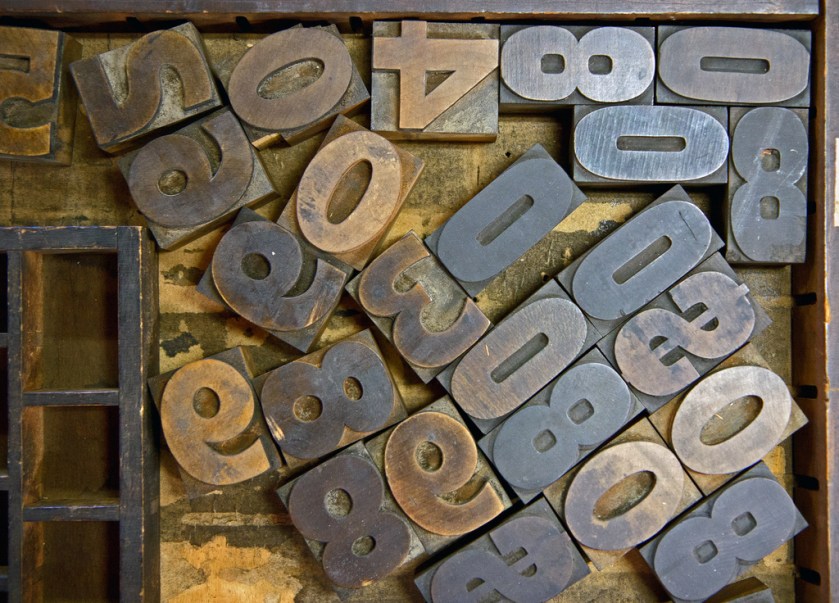
Jim Moran got some bad news last October while he was preparing for the Hamilton Wood Type & Printing Museum’s annual conference in Two Rivers, Wisconsin. Moran, who is director of the world’s only museum dedicated to the preservation, study, production, and printing of wood type, was told by his landlord that the museum had six months to find a new home. The news wasn’t entirely a shock. Moran and his small team had noticed that the building owner, lab equipment manufacturer Thermo Fisher Scientific, had begun downsizing the employees that shared the massive building, which was rapidly deteriorating. The museum, which was founded in 1999, took up 12,000-square-feet (with an additional 25,000 for storage) of the three-block long, 1.3 million-square-foot facility that the Hamilton Manufacturing Company had built, and added to, from 1910 to 1926. The manufacturer had donated free rent, lighting, and heat to the museum, but they were now closing their Two Rivers plant and moving production elsewhere. (MORE AFTER PHOTOS) Moran had to quickly raise the estimated $250,000 needed to pack …